Riftbound card variants: letters, stars and overnumbers
Riftbound identifies a printing by its collector number, and the number’s shape tells you what you are holding. The same piece of art can exist five ways, at five very different prices.
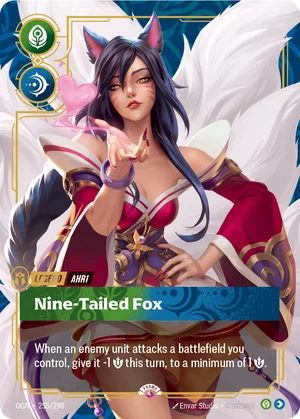
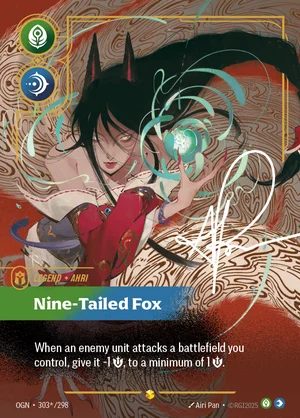
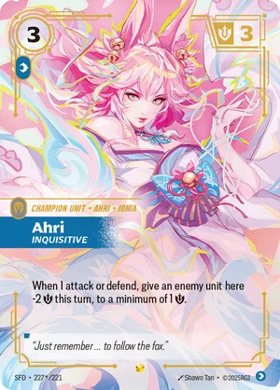
Reading the number
| Shape | Example | What it is |
|---|---|---|
| Plain number | 066/298 | The base printing. |
| Letter suffix | 066a | Alt art: same card, different illustration or frame. |
| Past the set size | 303/298 | Overnumber: a chase printing beyond the printed sequence. |
| Star | 303*/298 | Signature: the artist-signed showcase. The star is the only thing separating it from the overnumber. |
| SP prefix | SP1/006 | Vendetta Specials, a six-card subset with its own sequence. |
| R prefix | R01 | Runes, numbered apart from the main set. Rune alt arts add a letter too. |
| T prefix | T02 | Token cards. Double-faced tokens exist in several back-face combinations, told apart by a letter. |
Promos are their own thing
Promo printings from launch events and store programmes often reuse the base card’s number with a stamp or unique art on top, so the number alone cannot identify them; the product itself does. Rune promos also exist and carry a different letter than rune alt arts. Mejai’s tracks 259 promo printings and 282 showcase variants as separate cards, each with its own price.
Why bother with any of this
Money, mostly. An alt art can sell for thirty cents while its base card asks twelve dollars. A signature and its overnumber twin differ by a single star on the card and thousands of dollars on the market. Any tool that identifies cards by name alone, or by bare digits, will sooner or later file a $3,000 card as a $5 one. This is why the scanner reads the full collector number and why every price in the app belongs to one exact printing.